
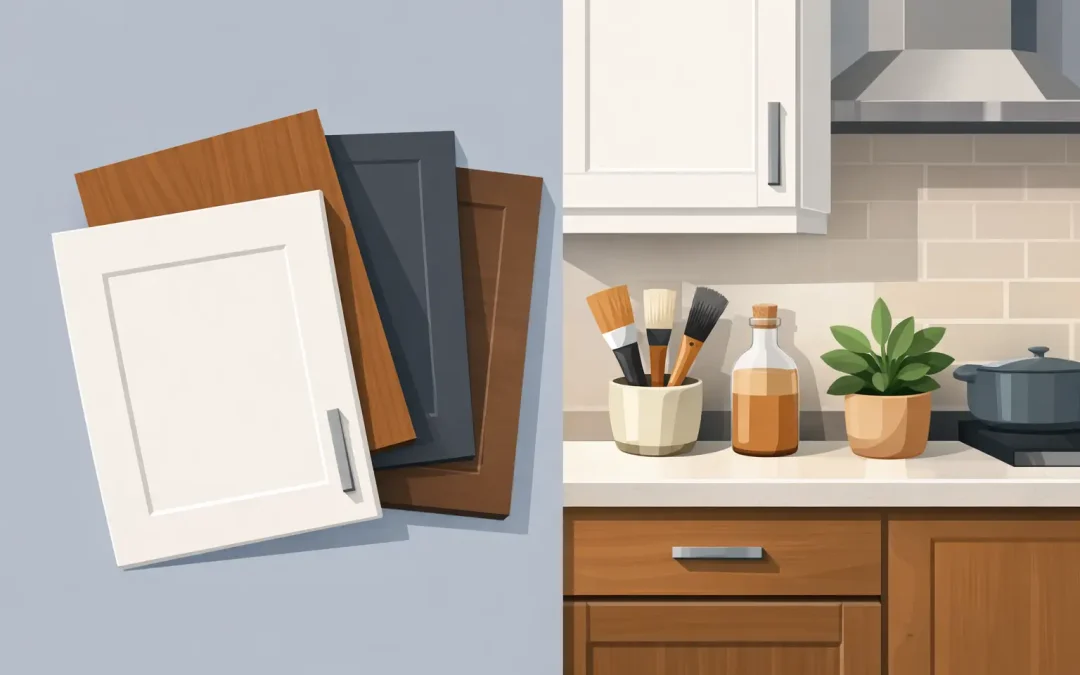
Cabinet doors take more daily abuse than almost any other painted surface in a home. They are opened with wet hands, bumped by chairs, exposed to cooking grease, and cleaned more often than walls or trim. That is why choosing the best finishes for kitchen cabinets is not simply a color decision. The right finish needs to suit the cabinet material, the condition of the existing surface, the look of the room, and the way your household uses the kitchen.
A professional cabinet refinishing job can make a dated kitchen feel new without the cost and disruption of replacing cabinetry. However, the coating system and preparation work matter just as much as the final color. A finish that looks great on the first day but chips around pulls and door edges within a year is not a good value.
What Are the Best Finishes for Kitchen Cabinets?
For most kitchens, the strongest choices are a professionally applied cabinet-grade painted finish, a stain protected by a clear topcoat, or a clear protective coat that preserves attractive natural wood. The best option depends on whether you want to cover the existing grain, highlight it, or protect cabinets that already have a finish worth keeping.
Painted finishes are the most popular choice for homeowners updating older oak, maple, or previously painted cabinets. Stain and clear coat systems are often the better fit for solid wood cabinetry with character, especially in traditional homes where the grain is part of the design. A clear coat alone can refresh wood while keeping its natural color front and center.
The key is choosing a finish designed for cabinets, not treating them like ordinary walls. Interior wall paint is not made to handle the repeated contact, cleaning, and moisture exposure found in a working kitchen.
Painted Cabinet Finishes: Clean Color and Strong Protection
A painted finish is the right choice when the existing wood grain is uneven, the cabinets have been repaired, or you want a complete change in color. White, warm off-white, soft gray, deep blue, and muted green remain popular because they can brighten a kitchen or give it a more tailored look.
For cabinets, a high-quality enamel or professional cabinet coating provides a harder, smoother surface than standard latex wall paint. Many professional systems are formulated to level out well and cure into a durable finish that resists sticking, scuffs, and household cleaners. This is particularly important on doors and drawers, where surfaces repeatedly rub together.
When painted cabinets make the most sense
Paint is especially effective on previously painted wood, MDF cabinet doors, and solid wood cabinets with a grain pattern you do not want to emphasize. It can also create consistency when a kitchen has a mix of repaired doors, replacement drawer fronts, or different wood species.
There is a trade-off. Paint can hide wood grain, but it does not correct loose joints, damaged veneer, dents, grease buildup, or poorly bonded old coatings. Those issues must be addressed before priming and painting. Careful sanding, cleaning, repairs, and the correct primer are what keep a painted finish from peeling or chipping prematurely.
Stained Cabinets With a Clear Protective Coat
Stain is a strong option when cabinets are made of quality wood and the grain deserves to be seen. It can deepen the natural character of oak, maple, cherry, birch, or other species while changing the overall tone of the kitchen. A lighter stain can reduce the orange cast of older wood, while a medium or darker color can bring warmth and definition to a larger room.
Stain itself is not the protective layer. It needs a durable clear topcoat over it. The topcoat protects the wood from moisture, fingerprints, food splatters, and regular cleaning while giving the cabinets their final sheen.
A clear coat can be selected in matte, satin, semi-gloss, or gloss. Satin is often the practical middle ground. It has enough sheen to wipe clean easily, but it does not highlight every small imperfection as strongly as a high-gloss finish. Semi-gloss gives a brighter, more traditional cabinet appearance, while matte works well in quieter, more contemporary kitchens but may require more careful cleaning.
Refinishing versus staining over an existing finish
Many homeowners ask whether cabinets can simply be stained over their current coating. Usually, the answer is no, not if a lasting result is the goal. Stain needs access to bare or properly prepared wood to penetrate evenly. Existing varnish, polyurethane, lacquer, paint, and factory coatings can block absorption and create blotchy color.
A proper staining project may require stripping or sanding the old finish, making repairs, conditioning the wood where needed, applying stain evenly, and protecting it with compatible clear coats. It is detail-sensitive work, particularly on cabinet doors with raised panels, routed edges, and narrow profiles.
Clear Coats for Natural Wood Cabinets
If your cabinets are structurally sound and the natural wood still fits the room, a clear coat may be all that is needed. Clear coating can restore a tired finish, improve cleanability, and protect the surface without changing the cabinets into something they are not.
This approach is often a good fit for well-built cabinetry in older Pittsburgh homes, including kitchens with detailed millwork that would lose some of its appeal under opaque paint. It can also be a sensible choice when the existing stain is still even and attractive but the topcoat has become dull, scratched, or worn near handles and sink areas.
Clear finishes are not one-size-fits-all. The existing coating must be tested and prepared so the new product bonds properly. Applying a new clear coat over grease, silicone residue, failing varnish, or an incompatible coating can lead to adhesion problems. Professional surface preparation makes the difference between a refreshed finish and a short-lived fix.
Choosing the Right Sheen for Cabinet Doors
Sheen affects both appearance and maintenance. It should be chosen after you decide on paint, stain, or clear coat, not before. The same cabinet color can look completely different in satin than it does in semi-gloss.
Satin is a popular choice because it gives cabinets a soft, finished look without excessive shine. It works well for painted cabinets in active family kitchens and for clear-coated wood where you want natural warmth without a glossy surface. Semi-gloss is more reflective and can be easier to wipe down, but it reveals surface flaws, brush marks, and unevenness more readily. Gloss has a polished appearance but is generally less forgiving on older cabinetry.
The right sheen also depends on lighting. Kitchens with large windows or bright recessed lighting can make high-sheen finishes appear much shinier than expected. Testing color and sheen on a small area or sample door before committing is a smart step.
Cabinet Material Changes the Recommendation
Solid wood cabinets give you the most flexibility. They can often be stained, painted, or clear coated, provided they are in good condition and properly prepared. Wood veneer can also be refinished, but it requires a careful hand because sanding too aggressively can damage the thin face layer.
MDF doors are commonly painted and can look excellent with the correct primer and cabinet coating. Their edges need special attention because they can absorb moisture and swell if they are not sealed properly. Laminate and thermofoil cabinets can be more challenging. They may be candidates for painting only if the existing surface is firmly bonded, thoroughly cleaned, and primed with products made for difficult surfaces. Peeling thermofoil should be evaluated before any finish is selected.
This is why an in-person assessment is valuable. Two kitchens may look similar from across the room but require very different preparation and coating methods.
Preparation Is the Finish Beneath the Finish
The visible coating gets the attention, but the work underneath determines how long it lasts. Kitchen cabinets collect cooking oils and cleaning product residue that can interfere with paint and clear coat adhesion. Doors need to be removed or carefully masked, hardware should be addressed, surfaces should be cleaned and sanded, and repairs should be completed before primer or finish coats are applied.
Professional application also matters. A sprayed cabinet finish can provide a smooth, even appearance when the workspace is properly protected and the coating is applied under controlled conditions. Brush and roller application can work for some projects, but it is more likely to leave texture on large, flat doors. The best method depends on the cabinets, the home, and the coating system being used.
For homeowners who want a durable update without replacing good cabinetry, the right cabinet finish begins with an honest look at the material and condition of what is already there. A careful refinishing plan can preserve quality woodwork, bring new color to the kitchen, and provide a finish built for the way your home is used every day. The Pittsburgh Painting Company can evaluate your cabinets and provide a clear, professional estimate for the finish that makes the most sense for your kitchen.
Recent Comments