
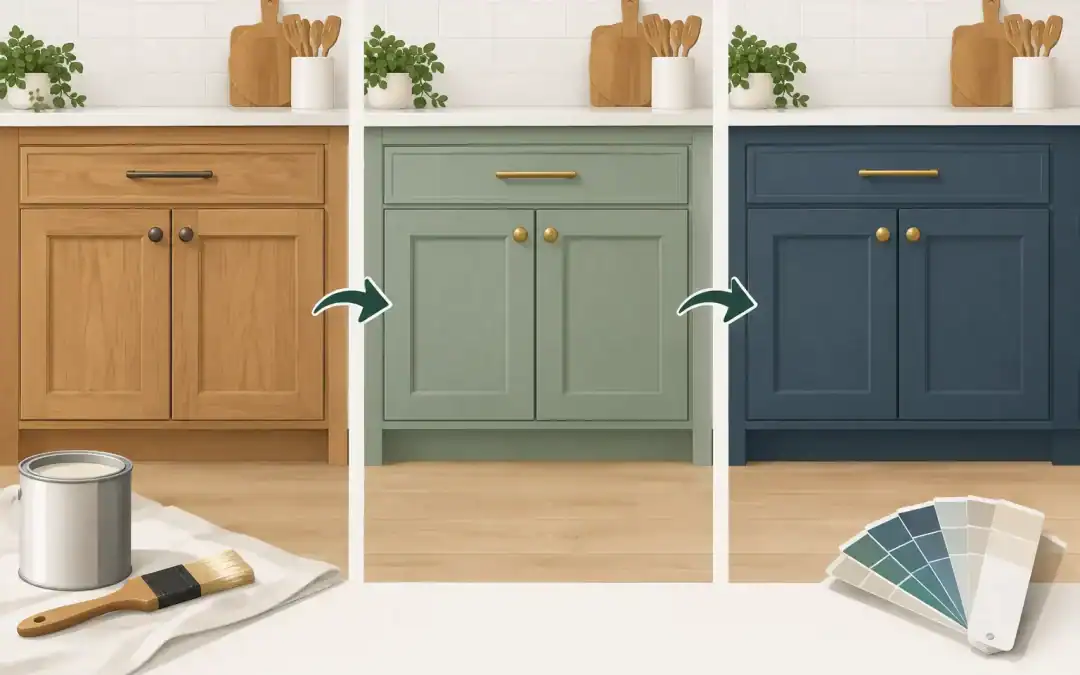
A cabinet finish does not have to be permanent. If you are looking at yellowed white paint, worn stain around the handles, or an outdated color that no longer fits the room, you may be asking: can cabinets be refinished twice? In many cases, the answer is yes. The deciding factor is not how many times the cabinets have been painted or stained. It is the condition of the wood, the existing finish, and the preparation completed before the new coating goes on.
Refinishing cabinets again can be a practical way to update a kitchen, bathroom, laundry room, or built-in storage without the cost and disruption of cabinet replacement. Done correctly, it can give solid older cabinets a clean, durable new appearance. Done without the right prep, it can leave homeowners dealing with peeling paint, rough surfaces, and doors that stick.
Can Cabinets Be Refinished Twice? Usually, Yes
Cabinets can often be refinished more than once, particularly when they are made from solid wood, quality plywood, or a durable cabinet-grade material. Many older homes throughout Pittsburgh and Western Pennsylvania have well-built cabinets that are worth preserving. Their doors and frames may show years of use, but the cabinet boxes themselves are often still sound.
A second refinishing project typically involves cleaning, repairing, sanding or deglossing the existing coating, priming where needed, and applying a new finish. The old coating does not always need to be stripped completely to bare wood. In fact, full stripping is sometimes unnecessary and can add time, expense, and risk to detailed doors or veneers.
The right approach depends on whether the existing finish is stable. A finish that is firmly bonded to the cabinet can serve as a sound base once it has been properly prepared. A finish that is lifting, cracking, greasy, or poorly adhered needs more extensive correction before any new paint or stain is applied.
What Determines Whether Refinishing Will Last
The cabinet material matters first. Solid wood cabinets are generally the best candidates for repeated refinishing because they can handle sanding and repair. Wood veneer can also be refinished, but it requires more care. Veneer is a thin layer of real wood, and aggressive sanding can cut through it and expose the material underneath.
Thermofoil, laminate, and melamine cabinets require a different evaluation. These surfaces can sometimes be repainted, but their slick factory finish makes adhesion more challenging. If the covering is separating from the doors, swelling near the sink, or peeling at corners, refinishing may not be the best long-term answer. Replacement doors or targeted repairs may make more sense.
The condition of the previous coating is just as important. Cabinets with minor scratches, fading, or ordinary wear are often strong candidates for another refinishing project. Cabinets with widespread peeling, bubbling, deep gouges, water damage, or layers of poorly applied paint may need more labor before they are ready for a new finish.
There is also a practical limit to repeated coatings. Every layer adds a small amount of thickness. After several heavy paint jobs, profiles can begin to look soft, door edges may feel less crisp, and hardware or doors may not operate as cleanly. A professional can determine whether the existing finish can be prepared successfully or whether a more thorough removal process is needed.
Preparation Is the Difference Between a Refresh and a Failure
Cabinets collect cooking oils, hand residue, furniture polish, and cleaning products. Much of that buildup is invisible, but it can interfere with paint adhesion. Simply wiping cabinets down and applying new paint is one of the most common reasons a refinished surface fails early.
Proper preparation starts with removing doors, drawer fronts, hardware, and removable hinges when appropriate. This allows the work to reach edges, profiles, and areas that are easily missed when everything remains in place. It also helps produce a more even finish without paint buildup around handles and hinges.
The surfaces then need a thorough cleaning with the right degreasing process. After cleaning, the existing finish is sanded or deglossed to create a surface the new coating can grip. Damaged areas are repaired, nail holes and dents are filled, and uneven spots are sanded smooth. If the cabinet has bare wood, stains, tannin bleed, or an uncertain previous coating, the correct primer becomes especially important.
This work is not glamorous, but it is where a professional paint job earns its value. The final coat gets the attention, but the preparation determines whether the finish looks smooth and stays put.
When Stripping to Bare Wood Is Worth It
Complete stripping is not required for every second refinishing project. It is often worth considering when a previous paint job is failing across large areas, when thick layers have buried detailed trim, or when a homeowner wants to change from paint back to a transparent stain.
Stripping may also be appropriate if the cabinet has an unknown finish that reacts poorly to sanding or new coatings. However, stripping is labor-intensive and can be difficult on veneered doors, ornate profiles, and older construction. It should be approached carefully rather than treated as an automatic step.
For many painted cabinet projects, a sound existing finish can be cleaned, sanded, primed, and recoated with excellent results. The goal is not always to remove every trace of the old finish. The goal is to create a stable, smooth foundation for the new one.
Paint, Stain, and Clear Coats Have Different Rules
Refinishing painted cabinets a second time is usually straightforward when the existing paint is in good condition. A new color can cover the old one after proper cleaning, sanding, spot repairs, and primer where necessary. Dark-to-light color changes may require additional coverage, while light-to-dark changes can sometimes show through less readily.
Restaining is more limited. If cabinets were previously stained and then protected with a clear topcoat, the old color generally must be removed or significantly altered before a new stain can penetrate evenly. Applying stain over a sealed surface will not produce a consistent result. Stain also cannot reliably make wood lighter without removing the existing color first.
A clear-coated cabinet can sometimes be refreshed without changing its color. If the clear finish is lightly worn but intact, careful cleaning, scuff sanding, and a compatible new clear coat may restore protection and improve appearance. If the finish is peeling or water-damaged, more repair will be needed.
Signs It May Be Time for More Than Refinishing
Refinishing improves the surface, not the structure. It is not a cure for cabinet boxes damaged by long-term leaks, doors that are badly warped, failing drawer slides, or particleboard that has swollen and broken down. Those issues should be addressed before investing in a new finish.
Watch for soft areas below the sink, cracked cabinet frames, loose joints, persistent mildew, and doors that no longer close properly. Hardware can often be upgraded, hinges can be adjusted, and minor wood repairs can be completed as part of a refinishing project. But seriously deteriorated components may need replacement to give the finished room the quality result you want.
A professional assessment can also prevent a color decision from becoming a maintenance problem. Very dark colors, for example, can show dust and fingerprints more readily. Bright white can make a smaller kitchen feel clean and open, but it may require more frequent touch-ups in a busy household. The best cabinet finish should fit both the room and the way the space is used.
Why Professional Cabinet Refinishing Matters
Cabinets are one of the most handled surfaces in a home. They are opened, closed, cleaned, bumped, and exposed to moisture every day. That makes product selection, surface prep, application method, and drying conditions more demanding than a typical wall-painting project.
Professional refinishing also helps keep the job organized. Doors and drawers are labeled, hardware is handled carefully, surrounding counters and floors are protected, and the work area is kept as clean as possible. The result should look like an intentional upgrade, not a weekend project that left overspray, brush marks, or unfinished edges behind.
For homeowners who want to preserve quality cabinets rather than replace them, a second refinishing project can be a smart investment. The Pittsburgh Painting Company evaluates the existing finish, explains the preparation required, and manages the work from surface repair through cleanup.
Before deciding to replace cabinets that are worn or simply out of style, have their condition evaluated. If the structure is solid and the previous coating can be properly prepared, refinishing again may give your room the polished, long-lasting update it deserves.
Recent Comments