
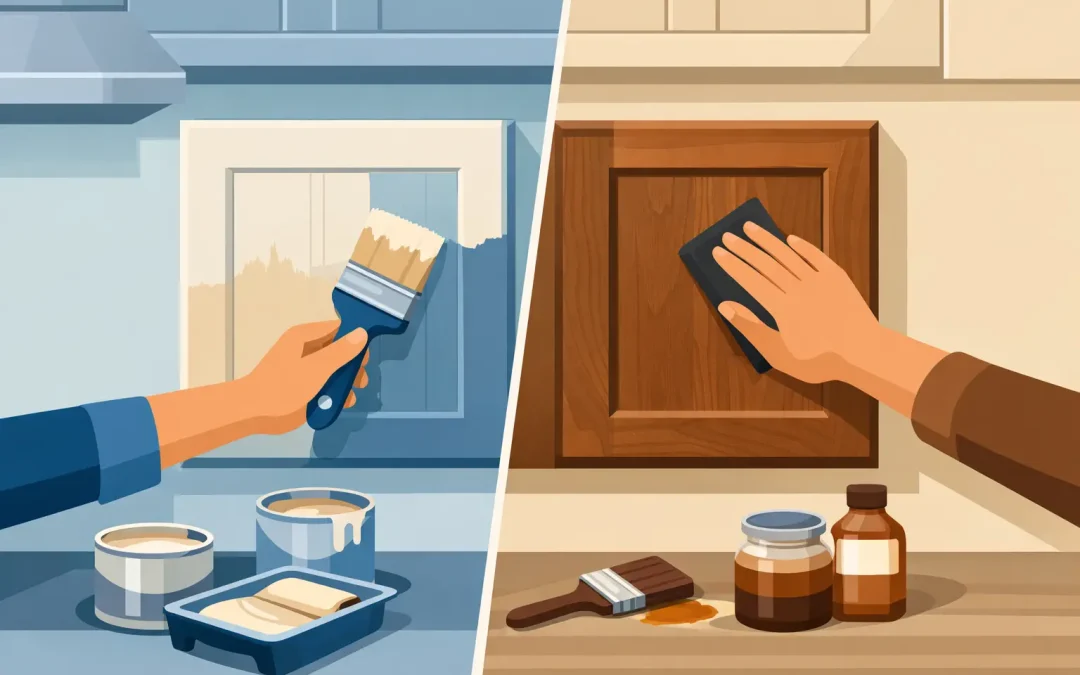
A kitchen can feel dated long before its cabinets stop being useful. Worn clear coats, orange-toned oak, chipped paint, and dark finishes can make an otherwise solid kitchen feel tired. When comparing cabinet painting vs refinishing, the right answer depends less on what is trendy and more on the cabinet material, current condition, desired look, and how much of the existing wood character you want to keep.
For many Pittsburgh-area homeowners, updating cabinets is a practical alternative to a full kitchen replacement. A professional finish can change the room dramatically while preserving well-built cabinet boxes, doors, and hardware. The key is choosing a process that fits the cabinets rather than forcing a finish that will not hold up.
What Cabinet Painting Means
Cabinet painting gives cabinets an opaque, solid-color finish. The grain and color underneath are covered, allowing homeowners to move from dated stained wood to white, warm greige, deep blue, black, or another color that suits the room.
A professional cabinet paint job is not simply a matter of applying wall paint to cabinet doors. Cabinets receive constant use, moisture, grease, fingerprints, and impact around handles and edges. Proper work begins with protecting the kitchen, removing or masking doors and hardware as needed, thoroughly cleaning surfaces, repairing minor damage, sanding or deglossing the existing finish, applying the appropriate bonding primer, and using a durable cabinet-grade coating.
Painting is often the best choice when the cabinets are structurally sound but their color is the problem. It also works well for doors with an uneven stain, faded finish, minor cosmetic wear, or wood species with a grain pattern the homeowner no longer wants to see.
The trade-off is that paint changes the appearance of the wood completely. If the cabinets have beautiful natural grain, custom details, or a stain color that could be restored, covering them may not be the best long-term decision. Deep grain can also remain faintly visible under paint unless it is properly filled and prepared.
What Cabinet Refinishing Means
Cabinet refinishing usually means restoring or changing the existing wood finish while preserving the wood itself. Depending on the project, that may involve cleaning, sanding, stripping failing coatings, repairing veneer or small defects, applying stain or toner, and protecting the cabinets with a clear coat.
The term can cause confusion because some contractors use “refinishing” as a broad description for any cabinet update, including painting. In the more traditional sense, however, refinishing focuses on bringing wood cabinets back to life rather than covering them with an opaque color.
Refinishing can be a strong option for solid wood cabinets, quality veneer, and older cabinetry with details worth saving. Many homes throughout Western Pennsylvania have cabinets that were built well but have lost their original warmth under years of sunlight, cooking residue, and everyday use. A fresh stain and clear protective finish can make the wood look cleaner, richer, and more intentional without erasing its character.
Refinishing does have limits. It cannot turn every cabinet into a completely different species of wood, and very dark stains may be difficult to lighten evenly. Cabinets with extensive water damage, peeling veneer, swollen particleboard, or severe grease contamination may need more repair than a simple refinish can provide. A close inspection should come before any finish decision.
Cabinet Painting vs Refinishing: The Main Differences
The most visible difference between cabinet painting vs refinishing is the final look. Painting creates a uniform solid color. Refinishing highlights the grain, variation, and natural texture of the wood.
The preparation process also differs. Both services require careful cleaning and surface preparation, but refinishing often demands more attention to the existing coating and wood condition. Old stain, failing lacquer, scratches, water rings, and uneven color may need to be corrected before a new stain or clear coat can look consistent. Painting can conceal certain discoloration and minor visual flaws, although it cannot correct loose joints, failing veneer, or damaged cabinet boxes.
Cost depends on the size of the kitchen, door style, cabinet construction, repairs, and finish selected. Painting may be more economical when a consistent color is the goal and the existing surfaces are in good condition. Refinishing can require more labor when stripping, detailed sanding, stain matching, or clear-coat restoration is necessary. The lowest initial price is not always the best value if poor preparation leads to peeling paint, uneven color, or a finish that wears out too soon.
Durability comes down to preparation and products as much as the selected method. A properly cleaned, sanded, primed, and coated painted cabinet can perform well for years. A properly refinished wood cabinet can also stand up to daily use while maintaining its natural appearance. In either case, skipping prep is where problems begin.
When Painting Is Usually the Better Choice
Painting is a practical choice when homeowners want a major style change without replacing usable cabinetry. It can brighten a smaller kitchen, make older cabinets feel more current, and coordinate the room with new counters, backsplashes, flooring, or appliances.
It is also helpful when the current stain is blotchy, the wood is not especially attractive, or the cabinets have a mix of materials that would be difficult to stain evenly. Many cabinet doors include solid wood frames with veneer panels or engineered components. A painted finish can create the consistent appearance those mixed surfaces may not achieve with stain.
For older homes, color selection deserves extra thought. A crisp white can look clean and classic, but a softer white or warm neutral may better suit original trim, wood floors, and the architectural character of a Victorian or traditional Pittsburgh home. Dark painted cabinets can add contrast, but they tend to show dust, scratches, and fingerprints more readily in a busy kitchen.
When Refinishing Is Worth the Extra Care
Refinishing is often the better fit when the cabinets are made from attractive hardwood and the homeowner values the grain. Maple, oak, cherry, walnut, and other quality woods can look exceptional after professional restoration, especially when the existing finish is simply worn, dull, or outdated.
It is also a sensible route when the kitchen already has architectural woodwork that should remain coordinated. Preserving a stained cabinet finish can maintain a home’s original personality in a way that a solid painted finish may not.
A clear coat refresh may be all that is needed for cabinets that are still the right color but have lost their protective sheen. In other cases, a new stain can shift the tone from orange or red to a more balanced brown without hiding the wood entirely. The right approach depends on test areas and a realistic understanding of what the existing species and finish will allow.
The Cabinet Condition Questions That Matter Most
Before choosing a color or stain, look closely at what is underneath. Solid wood doors generally offer the most refinishing flexibility. Wood veneer can also be refinished, but it must be treated carefully because the surface layer is thin. Thermofoil doors, laminate, and heavily damaged particleboard cabinets require a different evaluation and may not be good candidates for every finish process.
Pay attention to peeling edges, soft areas around the sink, loose hinges, damaged drawer boxes, and doors that no longer close properly. Finishing improves appearance, but it does not replace necessary carpentry repairs. Addressing those issues first helps protect the investment and produces a more polished result.
A professional estimate should include an assessment of cabinet material, surface condition, prep requirements, repairs, finish options, protection of surrounding areas, and cleanup. That planning is especially valuable in occupied homes, where keeping dust, odors, and disruption under control matters as much as the final color.
Why Professional Preparation Changes the Result
Cabinets are one of the most demanding surfaces in a home. They need a finish that bonds to the existing surface and cures properly under daily use. Grease near the range, hand oils around pulls, and moisture near the sink can interfere with adhesion if they are not removed completely.
Professional preparation also creates a smoother appearance. Sanding between coats, controlling dust, treating knots or stains when needed, and applying compatible primer and finish products can make the difference between a cabinet surface that looks factory-finished and one that looks rushed.
The Pittsburgh Painting Company has served local homeowners since 1978, and that experience matters when a kitchen calls for detailed prep, careful masking, clean work habits, and a finish selected for the cabinet material rather than a one-size-fits-all solution.
Choose the Finish That Fits Your Kitchen
If your cabinets are sound and you want a clean, dramatic color change, painting is usually the practical path. If they are quality wood and their grain is part of what makes the kitchen feel like home, refinishing may preserve more value and character. Either way, the condition of the cabinets should guide the project before a color chip or stain sample does.
A careful on-site evaluation can turn an uncertain choice into a clear plan. The best cabinet update is the one that respects your home, holds up to real daily use, and leaves the kitchen feeling refreshed without creating unnecessary stress.
Recent Comments