
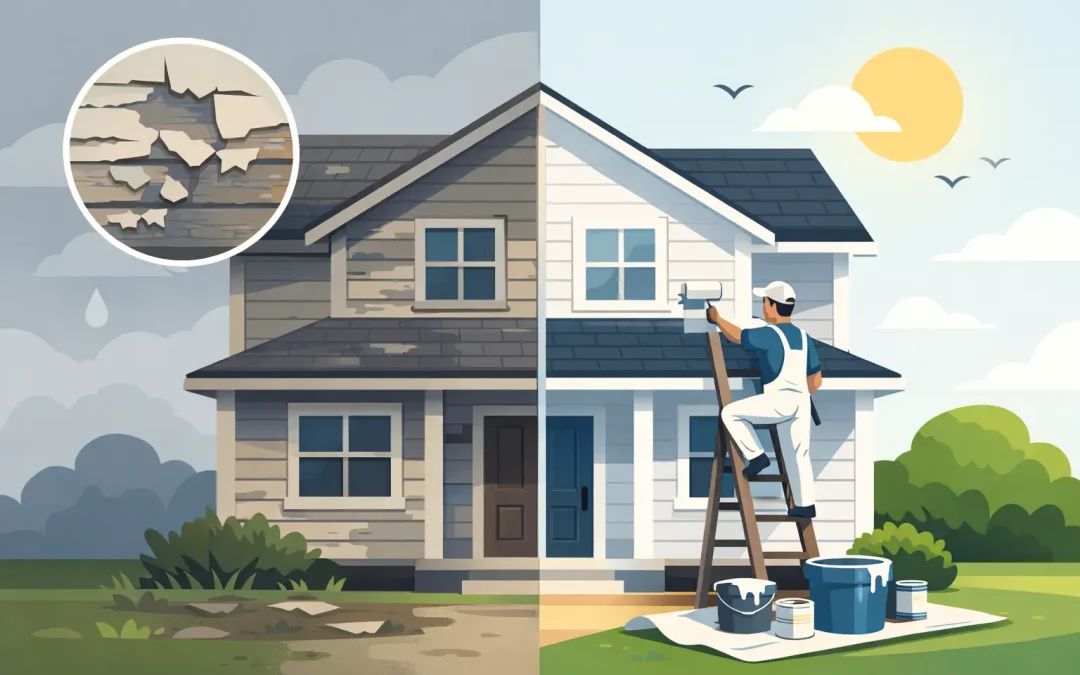
A house rarely announces that it needs paint with one obvious sign. More often, the warning shows up around window trim, on the sunny side of the home, or in a small crack where moisture has started to work behind the finish. If you are asking when should you repaint a house, look beyond color preference. The right timing protects the surfaces beneath the paint, preserves curb appeal, and can prevent a routine project from becoming a more expensive repair.
For homeowners in Pittsburgh and throughout Western Pennsylvania, timing matters even more. Snow, rain, humidity, freeze-thaw cycles, and strong summer sun all put pressure on exterior paint. Older homes, especially detailed Victorian properties with wood trim and multiple architectural surfaces, need regular attention before small failures spread.
When Should You Repaint a House Exterior?
Most exterior paint jobs last about five to 10 years, but that range is only a starting point. A properly prepared, professionally painted surface may last longer, while exposed wood, older siding, and areas that take direct weather can need attention sooner.
The best indicator is the condition of the existing paint and the material underneath it. Paint is more than a finish. It is a protective layer that keeps water, sunlight, and seasonal temperature changes from damaging siding, trim, fascia, shutters, and other exterior features.
Repaint before peeling becomes widespread
Peeling, cracking, blistering, or flaking paint means the protective coating is failing. A few isolated spots may be handled with careful scraping, sanding, priming, and touch-up work. But when failure appears across several sides of the house or continues returning in the same places, it is time to plan a more complete repaint.
Do not paint directly over loose material. The new paint will only be as sound as the surface below it. Professional preparation includes removing failing paint, correcting surface issues, cleaning the area, and applying the right primer where needed.
Watch for fading and uneven color
Fading is common on elevations that receive the most sun. Deep reds, dark blues, and other rich colors can lose their uniform appearance sooner than lighter shades. Fading alone does not always mean the paint has stopped protecting the house, but it can be a sign that the coating is nearing the end of its useful life.
If one side of your home looks noticeably duller than the others, assess it closely. Chalky residue on your hand after touching the surface, thinning color, and rough texture are good reasons to schedule an inspection before the next weather cycle causes further wear.
Look closely at caulk, joints, and exposed wood
Paint and caulk work together to keep water out. When caulk separates around windows, doors, trim boards, or siding joints, rain can reach areas that should stay dry. Likewise, exposed bare wood can absorb moisture quickly, leading to rot, swelling, and paint failure.
A repaint is often the right time to replace failed caulk and address damaged wood. This is one reason a professional paint job should begin with thorough preparation rather than a quick coat applied over visible problems.
Treat mildew and staining as a warning, not just a cosmetic issue
Dark streaks, green growth, and recurring mildew often appear on shaded areas where moisture lingers. They can usually be cleaned, but the source should be considered. Overhanging trees, poor drainage, clogged gutters, or limited airflow may be contributing to the problem.
Power washing and surface cleaning can prepare a home for painting, but they are not substitutes for correcting moisture conditions. If staining returns quickly, a quality repaint should be paired with practical maintenance around the property.
How Often Should You Repaint a House Inside?
Interior repainting is driven less by weather and more by use, wear, and the condition of the rooms. A formal dining room may look good for a decade, while a busy hallway, kitchen, bathroom, stairwell, or children’s bedroom can need paint much sooner.
Walls with scuffs, stains that will not clean off, patchwork from repairs, or a permanently dull finish are obvious candidates. So are rooms that no longer fit how you use the house. A fresh color can make an older room feel clean and intentional, but proper wall repair and surface preparation are what make the result look finished.
Ceilings deserve attention as well. Water marks, cracks, smoke discoloration, or aging texture should be evaluated before painting. A stain can be covered, but the cause of a leak or moisture issue must be resolved first. Painting over an active problem only delays the repair.
The Best Time of Year to Paint in Pittsburgh
For exterior work, late spring through early fall is generally the most dependable painting season in Western Pennsylvania. Painters need suitable temperatures, dry surfaces, and enough time for coatings to cure properly. A stretch of mild, dry weather is more useful than a single warm day between rainstorms.
That does not mean every summer day is ideal. High humidity, direct heat, unexpected rain, and cool nights can affect drying and adhesion. Professional crews plan around weather conditions, surface moisture, shade patterns, and the paint manufacturer’s temperature requirements.
Interior painting can be completed throughout the year. Winter is often a practical time to refresh living spaces, bedrooms, cabinets, and ceilings because weather does not control the work in the same way. Good ventilation, careful protection of furnishings, and clean jobsite practices still make a real difference to the experience.
Do Not Wait for Damage to Become Expensive
The trade-off is simple: repainting too early can mean giving up some remaining life in the existing coating, but waiting too long can expose the home to costly repairs. Once wood begins to rot or moisture works behind siding and trim, the scope of work expands beyond paint.
This is particularly true for older Pittsburgh homes. Decorative trim, porch components, wood windows, and detailed exterior features require patient preparation and close attention. Maintaining them on a regular schedule is usually less disruptive and less costly than restoring years of neglected damage.
A quick walk around the property twice a year can help. Check lower trim near landscaping, areas beneath gutters, porch railings, window sills, and the sides of the house that receive the most weather. Indoors, inspect high-traffic walls, bathrooms, ceilings below plumbing, and rooms where sunlight has changed the color noticeably.
What a Lasting Repaint Should Include
A quality repaint is not simply a matter of choosing a new color. The work should begin with a careful look at the surface condition and a clear plan for repairs. Exterior projects may involve washing, scraping, sanding, priming, caulking, protecting landscaping, and addressing minor wood issues before finish coats are applied.
Interior work should include protecting floors and furnishings, repairing nail holes and wall damage, sanding rough patches, priming stains or repairs when necessary, and completing a clean final touch-up. The right materials matter, but preparation and application are what allow those materials to perform.
For large homes and historic properties, it also helps to work with a contractor who understands how to manage detailed surfaces without treating the project like a quick production job. A careful estimate should identify what is being painted, what preparation is needed, and where repairs may affect the final scope.
A Practical Rule for Homeowners
If your paint is still intact, cleanable, and firmly bonded to the surface, you may have time to plan the project around your budget and preferred season. If it is peeling, chalking, exposing bare material, allowing failed caulk, or making your home look uneven and neglected, waiting is rarely the better value.
The Pittsburgh Painting Company has worked on homes throughout the region since 1978, including large and detail-sensitive properties that need more than a quick coat of paint. A professional assessment can help you decide whether your house needs immediate work, targeted repairs, or a full repaint planned for the right season.
A fresh paint job should do more than make a house look renewed. Done at the right time and with the right preparation, it helps protect the home you have worked hard to maintain.
Recent Comments