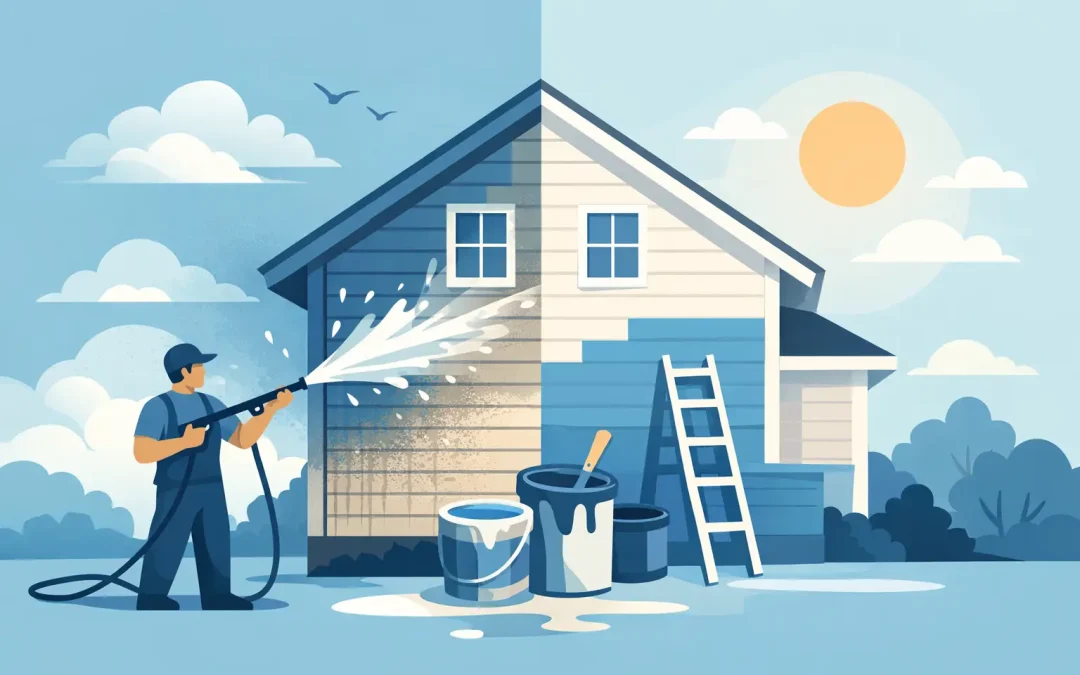
A fresh exterior paint job can look excellent on day one and still fail far sooner than it should. The difference is often what was left on the siding before the first coat went on. Power washing house before painting removes the dirt, chalking, mildew, pollen, cobwebs, and loose material that keep new paint from making a solid bond with the surface.
In Western Pennsylvania, exterior surfaces take a beating. Rain, humidity, tree cover, winter grime, and changing temperatures all leave their mark on siding, trim, brick, and porches. Proper washing is not an optional cosmetic step. It is part of the preparation that helps a professional paint job hold up.
What Power Washing Does Before Exterior Painting
Paint needs a clean, sound, and dry surface. Even a house that appears clean from the sidewalk can have a thin film of grime or powdery old paint that interferes with adhesion. When new paint is applied over that contamination, it may blister, peel, or wear unevenly.
A controlled wash clears away the buildup that ordinary rinsing cannot handle. It also exposes the true condition of the exterior. Once dirt and mildew are gone, it becomes easier to see cracked caulk, deteriorated wood, failing paint edges, nail pops, and areas that need repair before painting begins.
This matters especially on older homes throughout Pittsburgh and the surrounding communities. Detailed trim, wood siding, porch columns, shutters, and decorative Victorian features can hide years of buildup. Cleaning those surfaces carefully gives the painting crew a clear starting point and prevents problems from being covered up rather than corrected.
Is Power Washing Always the Right Choice?
It depends on the material and its condition. “Power washing” is commonly used to describe the cleaning process, but a skilled contractor does not use the same pressure or technique on every surface. The goal is to clean the house, not force water behind siding or damage the substrate.
Vinyl siding can typically be cleaned effectively with low pressure and an appropriate cleaning solution. Wood siding requires more caution, particularly if it is older, weathered, or showing signs of rot. High pressure can gouge soft wood, raise the grain, strip away sound paint, or drive moisture into joints and gaps.
Stucco, fiber cement, brick, and painted masonry also require a material-specific approach. Brick may tolerate more cleaning pressure than painted wood, but damaged mortar joints should be handled carefully. On a home with aging exterior details, lower pressure, proper detergents, hand cleaning, and thorough rinsing may be the better choice.
A professional inspection helps determine whether the house needs a standard wash, soft washing, spot treatment for mildew, scraping after cleaning, or a combination of methods. There is no benefit to taking an aggressive approach just because a machine is available.
Mildew Must Be Treated, Not Painted Over
Dark or greenish staining is common on shaded sides of homes, beneath gutters, near landscaping, and around porches. It is often mildew or algae, not just dirt. If it is painted over without being properly cleaned and treated, it can continue to affect the coating and may reappear through the paint.
A proper cleaning process uses the right exterior cleaner for the staining present, allows it time to work, and rinses the area completely. Care should also be taken around plants, windows, electrical fixtures, and nearby surfaces. Good preparation protects the property as well as the paint job.
Cleaning is also a good time to identify the source of recurring moisture. Overgrown shrubs against the siding, clogged gutters, leaking downspouts, and inadequate airflow can all contribute to mildew growth. Paint can improve protection and appearance, but resolving the moisture issue helps the finish stay cleaner longer.
How Long Should You Wait to Paint After Washing?
The exterior must dry fully before primer or paint is applied. In many cases, 24 to 48 hours is sufficient, but weather, material type, shade, and humidity can extend that timeline. Pittsburgh’s humid summer days, cool mornings, and shaded hillsides can make drying less predictable than a simple forecast suggests.
Wood requires particular care. It may feel dry on the surface while holding moisture deeper in the boards or around joints. Painting damp wood can trap moisture beneath the coating, leading to peeling, blistering, and premature failure. A dependable painting contractor checks the surface condition rather than rushing forward because the calendar says it is time to paint.
The same principle applies after rain. If a washed house receives a heavy shower before painting, the schedule may need to shift. That is not wasted time. It is the kind of preparation decision that protects the finished work.
Washing Does Not Replace Repairs and Paint Removal
Power washing is a starting point, not the entire prep process. Loose paint may come off during cleaning, but remaining failing edges usually need to be scraped and sanded to create a smooth transition. Cracked caulk needs to be removed and replaced, damaged boards need repair or replacement, and bare areas may need primer before finish coats are applied.
For homes built before 1978, old paint may contain lead. Disturbing lead-painted surfaces requires careful, regulated work practices. High-pressure washing is not a shortcut for stripping old paint, and homeowners should not assume every peeling area can be blasted clean safely. An experienced contractor can evaluate the surface and plan the appropriate preparation.
Once repairs, sanding, and priming are complete, the final coating has a much better foundation. That extra work may not be the most visible part of the project, but it is often what separates a paint job that merely looks new from one that performs well over time.
Common Problems With DIY Pressure Washing
Pressure washers are useful tools, but they can create expensive problems in a few minutes when used incorrectly. Too much pressure can scar wood, break window seals, loosen siding, damage screens, and carve lines into painted trim. A narrow spray pattern can be especially destructive when held too close to the surface.
Water direction matters as much as pressure. Spraying upward under lap siding, around window trim, or into vents can send water where it does not belong. That moisture may not be visible immediately, yet it can delay painting or contribute to damage behind the exterior surface.
Cleaning products also deserve attention. A solution that is too strong can harm plants or discolor certain materials. A solution that is too weak may leave mildew behind. Professional crews balance cleaning strength, water pressure, dwell time, and rinsing based on the house in front of them.
A Better Preparation Plan for Pittsburgh Homes
The most reliable exterior painting process starts with a close look at the home, not a one-size-fits-all cleaning method. The crew should identify the siding material, existing coating condition, staining, moisture concerns, damaged areas, and architectural details before preparation begins.
From there, washing can be tailored to the property. The house is cleaned carefully, allowed to dry, then scraped, sanded, caulked, repaired, and primed where needed. Only after those steps are complete should finish paint be applied. This organized approach keeps the work cleaner, helps avoid surprises, and gives the coating the best chance to last through local weather.
The Pittsburgh Painting Company has worked on homes with everything from straightforward siding to detailed older exteriors that need patient restoration work. Preparation is handled as part of the job, because lasting results depend on more than selecting a good paint color.
If your exterior is showing mildew, chalking paint, dirty siding, or peeling trim, start with an honest assessment of the surface rather than planning around a quick coat of paint. A careful wash and complete preparation plan can protect your home’s appearance, its materials, and your investment for years to come.
Recent Comments