
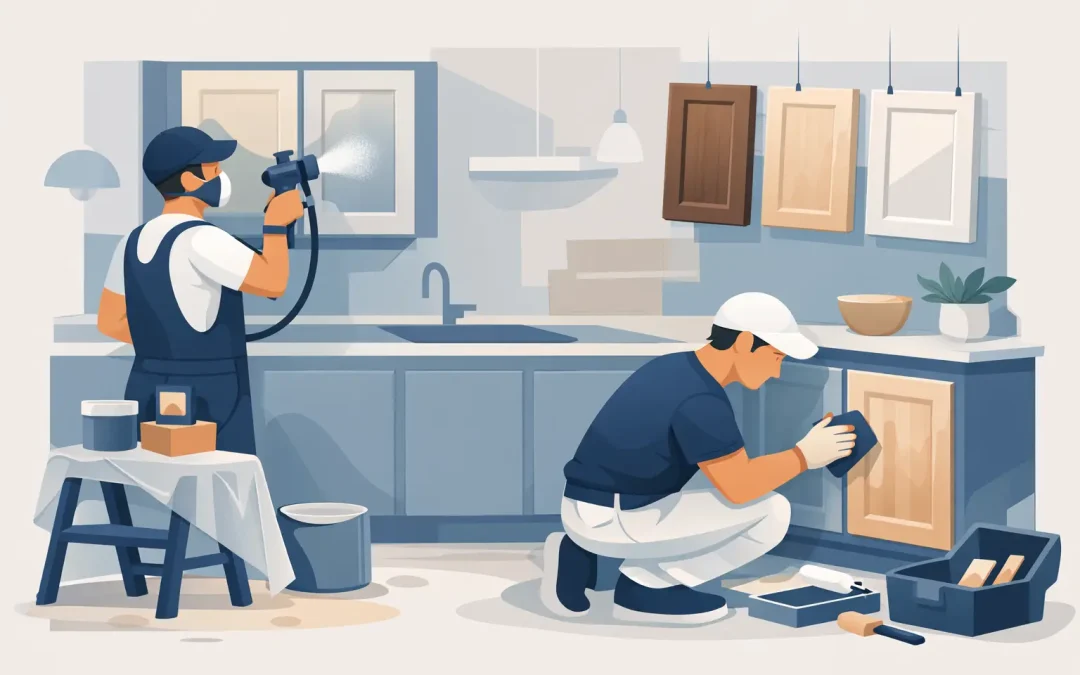
A kitchen can feel dated long before its layout stops working. Scuffed doors, faded stain, yellowing clear coats, and worn edges make the whole room look tired, even when the cabinets are still solid. Professional cabinet refinishing services give Pittsburgh homeowners a practical way to improve that space without the cost, disruption, and extended timeline of a full cabinet replacement.
For many homes across Western Pennsylvania, especially older homes with well-built wood cabinetry, refinishing is not a shortcut. It is a careful restoration process. The result should look clean, even, and durable enough for a room that gets daily use.
When Cabinet Refinishing Is the Right Choice
Cabinet refinishing works best when the cabinet boxes, doors, and drawer fronts are structurally sound. If doors close properly, the wood is in good condition, and the layout still serves your household, there may be no reason to tear everything out. A professional finish can change the color, renew a worn surface, or bring natural wood grain back to life.
Refinishing is often a smart option for homeowners who want a kitchen update while keeping a project under control. It can preserve quality cabinetry that would be expensive to replace, particularly in large homes and older Pittsburgh properties where original details are worth keeping.
That said, refinishing does have limits. Cabinets with major water damage, swollen particleboard, peeling laminate, broken frames, or outdated layouts may need repair, replacement, or a combination of services. An honest on-site assessment helps determine whether refinishing will provide a result you will be happy with for years.
What Professional Cabinet Refinishing Services Include
The quality of a cabinet project depends less on the final coat than on the work completed before it. Cabinets collect kitchen grease, hand oils, cooking residue, and cleaning products over time. Paint or stain applied over those contaminants may fail early, chip around handles, or develop an uneven sheen.
Professional cabinet refinishing services begin with detailed preparation. Doors and drawer fronts are removed when appropriate, hardware is labeled and protected, and surrounding countertops, floors, appliances, and walls are carefully covered. The surfaces are thoroughly cleaned, repaired where needed, and sanded to create a sound base for the new finish.
Small details make a noticeable difference. Dings, worn corners, open grain, old hardware holes, and surface imperfections should be addressed before the final finish is applied. Proper priming is also essential when changing from stained wood to a painted finish or when covering a dark color with a lighter one.
The final coating system should be selected for cabinet use, not simply taken from a standard wall-paint process. Kitchen cabinets need a finish that can stand up to frequent cleaning, moisture, and repeated contact. A professional application also helps create a more consistent appearance across doors, drawer fronts, face frames, and trim.
Painted Cabinets, Stained Wood, and Clear Coats
There is no single best cabinet finish. The right choice depends on the condition of the cabinets, the style of the home, and how you use the kitchen.
Painted cabinets can give a room a brighter, more current look. White, soft gray, warm cream, deep blue, and muted green remain popular choices, but color should work with the countertops, backsplash, floors, and natural light. In a Victorian or historic home, a carefully selected color can update the room without making it feel out of character.
Staining is a good option when the wood grain is a feature worth preserving. It can deepen the natural tone, correct fading, or shift the color from an orange or red cast to something more neutral. Clear coating can refresh wood cabinetry that has lost its protective finish but does not need a major color change.
Each route involves trade-offs. Paint provides stronger color transformation, but it covers the grain. Stain keeps the wood character visible, but it may not hide uneven coloration, repairs, or different wood species as effectively. A clear coat is the least disruptive choice, though it will not correct a cabinet color you no longer like.
Why Preparation Protects the Finish
Cabinet doors are touched more than almost any other painted surface in a home. They are opened with wet hands, bumped by dishes, exposed to steam, and cleaned often. That is why rushed prep usually shows up quickly.
A dependable contractor takes time to clean and sand thoroughly, use the right bonding products, and allow proper drying between stages. The goal is not just a cabinet that looks good on completion day. It is a finish that adheres well and wears evenly through normal household use.
Clean work habits matter just as much. Refinishing can involve dust, odors, and multiple steps, so the work area needs to be contained and organized. Homeowners should know what will be removed, what rooms may be affected, how long the job is expected to take, and when the cabinets can be put back into regular service.
What to Expect During the Project
Most cabinet refinishing projects start with a walkthrough and a clear estimate. The contractor should review the cabinet material, current finish, needed repairs, desired color or stain, hardware plans, and access to the work area. This conversation is the time to discuss practical concerns, such as whether you need to use the kitchen during the project or whether new pulls will require existing holes to be filled or adjusted.
Once the work begins, preparation and protection come first. Doors, drawers, and hardware are handled carefully so they can be reinstalled correctly. Cabinet frames are masked off from nearby surfaces, and the area is kept as orderly as possible throughout the job.
The timeline depends on the number of cabinets, their condition, the chosen finish, the amount of repair work, and drying conditions. A simple clear-coat refresh may move more quickly than a full color change with extensive sanding and priming. The best approach is to allow the process the time it needs rather than rushing the finish back into service.
After the coatings have cured as recommended, doors and hardware are reinstalled, adjustments are made, and the work area is cleaned. Complete project management from preparation through cleanup helps make the experience more manageable for busy homeowners.
How to Keep Refinished Cabinets Looking Their Best
A quality finish still benefits from sensible care. Use a soft cloth and a mild cleaner rather than abrasive pads, harsh solvents, or aggressive degreasers. Wipe up splashes promptly, especially around the sink, dishwasher, and stove. Avoid hanging wet towels over cabinet doors, and use handles or pulls consistently when possible to reduce wear from hand oils.
Cabinets also need time to fully cure after refinishing. A finish may feel dry before it reaches its full hardness. Following the contractor’s care instructions during those first weeks helps protect the new surface when it is most vulnerable.
If a scratch or chip occurs later, address it early. Small repairs are generally easier to blend before moisture or repeated cleaning reaches the exposed area.
Choose a Contractor Who Treats Cabinets as Fine Finish Work
Cabinet refinishing is a detail-sensitive service. It requires more than applying a new color. The work calls for careful surface evaluation, disciplined preparation, clean protection of the home, and a finish system suited to demanding kitchen conditions.
The Pittsburgh Painting Company brings decades of hands-on painting and finishing experience to projects where details matter. For homeowners who want to refresh a kitchen while preserving the cabinets they already own, a professional estimate is the right first step. A close look at the existing cabinetry can turn a worn kitchen into a clean, finished space you will be glad to use every day.
Recent Comments