
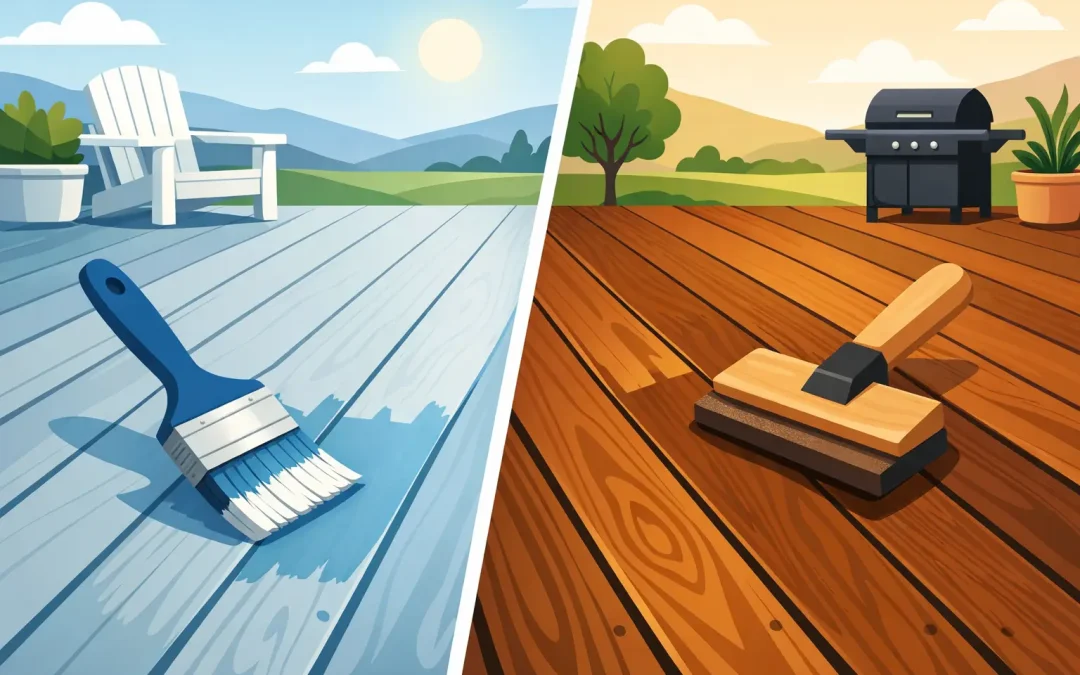
A deck can look worn long before the structure is ready to be replaced. Fading boards, peeling finish, mildew stains, and splintered walking surfaces are common around Pittsburgh, where snow, rain, humidity, and summer sun all take their turn on exterior wood. The paint vs stain deck decision affects more than color. It determines how your deck handles weather, how often it needs attention, and how much of the wood’s natural character remains visible.
There is no single right answer for every property. A covered porch, a sunny pool deck, an older pressure-treated deck, and a restored Victorian home each have different needs. The best finish starts with an honest look at the wood, the existing coating, and how you want the deck to look and perform over time.
Paint vs Stain Deck: The Main Difference
Paint forms a solid, opaque layer over the surface. It can provide a uniform color and cover uneven tones, weathering, or minor visual imperfections in the boards. Stain penetrates the wood or sits lightly at the surface, depending on the product. Most stains allow at least some grain and texture to show through.
That difference changes the maintenance picture. Paint can offer excellent coverage when the surface is properly prepared, but it may peel or chip when moisture gets beneath the coating. Stain generally fades and wears away gradually rather than peeling in sheets, which often makes future maintenance more straightforward. On the other hand, stain will not conceal damaged, mismatched, or heavily discolored boards as effectively as paint.
For homeowners deciding between the two, appearance matters, but preparation matters even more. A beautiful finish applied over damp wood, failed coating, or surface contamination will not stay beautiful for long.
When Paint Is the Better Choice
Paint is often a good fit when a deck has aged unevenly or has boards with inconsistent color that you would rather not highlight. It creates a cleaner, more finished appearance and gives homeowners more color options. A painted deck can coordinate closely with exterior trim, siding, railings, shutters, or porch details.
It can also be a practical option for older decks that have already been painted. Removing every trace of an existing solid coating simply to apply a transparent stain is usually not realistic or cost-effective. In that situation, restoring the surface and applying a quality exterior deck coating may be the sounder approach.
Painted railings, posts, skirting, and other vertical deck components can hold up especially well because they receive less foot traffic and standing water than the deck floor. Many properties benefit from a combination approach: paint for railings and trim, with a deck stain or solid-color stain on the horizontal walking surface.
Paint does have limits on deck boards. Horizontal surfaces expand, contract, collect moisture, and receive constant abrasion from shoes, furniture, grills, pets, and shovels. If the coating is too thick, the wood is not dry enough, or the prep work is incomplete, paint can crack and peel. Once peeling begins, spot repairs can become more noticeable and the next maintenance cycle may require more labor.
When Stain Is the Better Choice
Stain is usually the preferred choice when you want the wood to look like wood. Transparent and semi-transparent stains preserve more grain, variation, and natural texture. They are well suited to newer wood in good condition, cedar, and decks where the boards are an important part of the home’s overall character.
For many Western Pennsylvania decks, stain is also a sensible maintenance choice. It tends to wear down gradually in the traffic paths and exposed areas instead of separating from the surface. When it is time to refresh the finish, proper cleaning, light sanding where needed, and a maintenance coat may be enough. The exact process depends on the stain type and the condition of the deck.
Solid-color stain occupies a middle ground. It provides strong color coverage that can hide much of the wood’s uneven appearance, yet it is formulated to behave more like a stain than traditional paint. It is a strong option for older decks with sound boards that need a more uniform look without the heavier film associated with paint.
A transparent stain is not a shortcut for a neglected deck. It will not disguise gray wood, old paint remnants, nail stains, deep mildew marks, or rough repairs. The more transparent the stain, the more clearly the condition of the wood will show. If the boards are badly weathered, a semi-transparent or solid stain may produce a more satisfying result.
Pittsburgh Weather Changes the Equation
Deck finishes work hard in this region. Winter moisture can enter small cracks and freeze. Spring rain and shade can encourage mildew. Summer heat and ultraviolet exposure can dry and fade exposed boards. Leaves, pollen, and dirt can hold moisture against the surface, particularly on decks surrounded by mature trees.
That is why a finish should never be selected by color alone. The deck needs to shed water properly, and the boards need enough time to dry after cleaning or rain. Any loose coating, failed caulk, surface residue, or mildew should be addressed before a new finish is applied. Areas near planters, downspouts, stair landings, and the house wall deserve special attention because they often remain damp longer.
Good preparation also helps reveal whether boards are still worth finishing. Soft wood, serious rot, loose fasteners, and badly cupped or split boards should be repaired before coating. No paint or stain can correct a structural problem, and covering damaged wood only delays the repair.
The Preparation Behind a Long-Lasting Finish
The finish coat gets the attention, but preparation determines the result. A professional deck project typically begins with an assessment of the existing surface: what product is on it now, where it is failing, whether moisture is present, and whether the wood can accept a new coating.
Deck cleaning removes dirt, mildew, loose fibers, and contaminants that interfere with adhesion. Power washing can be helpful, but excessive pressure can damage wood fibers and leave a fuzzy, rough surface. It needs to be done carefully, followed by adequate drying time. Depending on the deck, sanding may be needed to smooth raised grain, remove loose paint, feather peeling edges, and prepare high-traffic areas.
The existing finish is one of the biggest deciding factors. A deck coated with a solid paint-like product generally needs another compatible solid coating unless extensive removal is planned. A deck with a worn penetrating stain may be a better candidate for another stain, provided the surface is cleaned and prepared correctly. Applying a product that does not match the condition of the deck can lead to uneven absorption, adhesion problems, and disappointing color.
Consider Upkeep Before Choosing a Color
A deck is not a one-time project. Even the best finish will eventually need maintenance. The question is whether you prefer a finish that may require more involved repairs when it fails or one that may need more frequent refreshing as it fades.
Paint offers bold color and strong hiding power, but peeling areas need careful scraping, sanding, and priming before recoating. Stain may fade sooner in direct sun and high-traffic zones, but it is often easier to renew without stripping the entire deck. Dark colors can become hot under bare feet, while very light colors can show dirt and leaf stains more easily.
Think about how the deck is used. A quiet covered deck may keep a finish longer than an open entertaining space with frequent foot traffic. A home with dogs, children, heavy outdoor furniture, or regular grilling may benefit from a practical, repair-friendly finish rather than a delicate look that is difficult to maintain.
A Professional Assessment Can Save a Repaint
The Pittsburgh Painting Company has worked on exterior surfaces throughout the region since 1978. For deck work, the goal is not simply to apply a new coat. It is to identify the condition of the wood, prepare it thoroughly, and recommend a finish that fits the deck rather than forcing a one-size-fits-all solution.
If your deck is peeling, fading, or turning gray, start by looking beyond the color you want. Check the wood condition, existing coating, drainage, sun exposure, and the time you are willing to spend on upkeep. A well-prepared paint or stain finish can give your outdoor space a cleaner appearance and more years of dependable use. When the choice is unclear, a professional estimate can provide a practical recommendation before small surface problems become a larger repair.
Recent Comments