A garage floor has a tougher job than most surfaces in a home. It handles vehicle weight, wet boots, road salt, dropped tools, oil drips, and temperature swings through a Western Pennsylvania winter. Professional garage floor coating services give that hardworking concrete a clean, durable finish that is easier to maintain and better prepared for daily use.
For Pittsburgh-area homeowners, a coated floor is not simply a cosmetic upgrade. It can help protect a garage from the salt residue, moisture, staining, and surface wear that gradually make bare concrete look neglected. The right coating also makes the entire space feel more finished, whether the garage is used for parking, storage, hobbies, or a home workshop.
What a Garage Floor Coating Can Do for Your Property
Bare concrete is porous. It absorbs liquids, collects dust, and can develop stains that are difficult to remove. Over time, minor cracks, surface wear, and moisture exposure can leave a garage floor looking rough even when the rest of the property is well maintained.
A professionally applied coating creates a protective layer over the concrete. Depending on the coating system and the condition of the floor, it can improve resistance to tire marks, oil, household chemicals, dirt, and road salt. It also gives the surface a more uniform appearance, making cleanup far less of a chore.
The visual difference matters, too. A clean gray finish, decorative flake system, or custom color can make a garage feel like a purposeful part of the home rather than a catch-all space. For property owners preparing to sell, updating an older home, or simply taking pride in a well-kept property, that improvement can carry through to the overall impression of the house.
Why Preparation Matters More Than the Coating Itself
A coating is only as dependable as the surface beneath it. This is where professional workmanship makes a real difference. Applying a product over dust, moisture, old residue, or failing concrete may look acceptable at first, but poor preparation can lead to peeling, bubbling, and uneven wear.
Before coating begins, the floor should be carefully evaluated. Oil spots, previous sealers, loose material, cracks, and moisture concerns all need to be addressed based on the condition of the concrete. Cleaning alone may not be enough. The surface may require mechanical preparation or other steps to create the proper profile for adhesion.
Cracks also deserve attention before the final finish is applied. Not every crack means the slab has a serious structural problem, but filling and preparing visible imperfections helps create a cleaner appearance and avoids coating over issues that may show through later.
At The Pittsburgh Painting Company, preparation is treated as part of the job, not an extra step to rush through. From protecting the surrounding area to completing cleanup after the work is done, a professional process helps keep the project organized and the finished floor looking its best.
Choosing the Right Garage Floor Coating Services
There is no single coating that is right for every garage. The best choice depends on how the space is used, the condition of the concrete, the desired appearance, and the timing of the project.
A homeowner who wants a straightforward, easy-to-clean garage may prefer a practical solid-color finish. Someone using the space as a workshop may place more value on durability and chemical resistance. A property owner updating a high-visibility garage may want decorative flakes or a finish that complements the home’s existing colors.
The condition of the slab is equally important. Older Pittsburgh homes often come with concrete that has seen decades of use. A worn floor may need more extensive repair and preparation than a newer slab. In some cases, active moisture conditions or significant deterioration should be evaluated before a coating is selected. A good contractor will explain those considerations honestly instead of promising a one-size-fits-all solution.
Appearance and Function Should Work Together
A garage floor coating should look polished, but it also needs to fit the way the garage functions. Light colors can brighten a darker garage, although they may show dirt more quickly. Darker finishes can hide some day-to-day debris, while decorative flake systems can add visual texture and help mask minor marks.
Gloss level is another practical choice. A high-gloss surface can reflect more light and create a sharp finished look. A lower-sheen finish may better suit garages where glare is a concern. If traction is especially important, such as near an entry door or in a work area that gets wet, an appropriate texture or additive may be worth discussing.
Pittsburgh Weather Is Hard on Garage Concrete
Western Pennsylvania weather puts garage floors through a regular cycle of wet conditions, freezing temperatures, thawing, and road-salt exposure. During winter, vehicles bring slush and salt into the garage. In spring, melting snow and rain can keep that moisture moving across the floor. Without protection, the concrete can absorb contaminants and become more difficult to clean season after season.
A properly selected and applied coating helps create a barrier between the concrete and the mess that comes in with everyday driving. It does not eliminate the need for routine care, but it can make maintenance simpler. Sweeping grit, wiping spills promptly, and rinsing away winter residue when appropriate can help preserve the appearance of the finish.
Scheduling also matters. Coatings need suitable surface and air conditions to cure properly. Temperature, humidity, and the moisture level of the slab can affect the process. That is why an experienced contractor will evaluate the garage and recommend a realistic schedule rather than treating every day and every floor the same.
What to Expect During a Professional Coating Project
The exact process varies by coating system and floor condition, but a well-managed project follows a clear sequence. First comes an inspection of the concrete and a discussion of the homeowner’s goals. The contractor should identify visible repairs, existing stains, and any conditions that could affect adhesion or appearance.
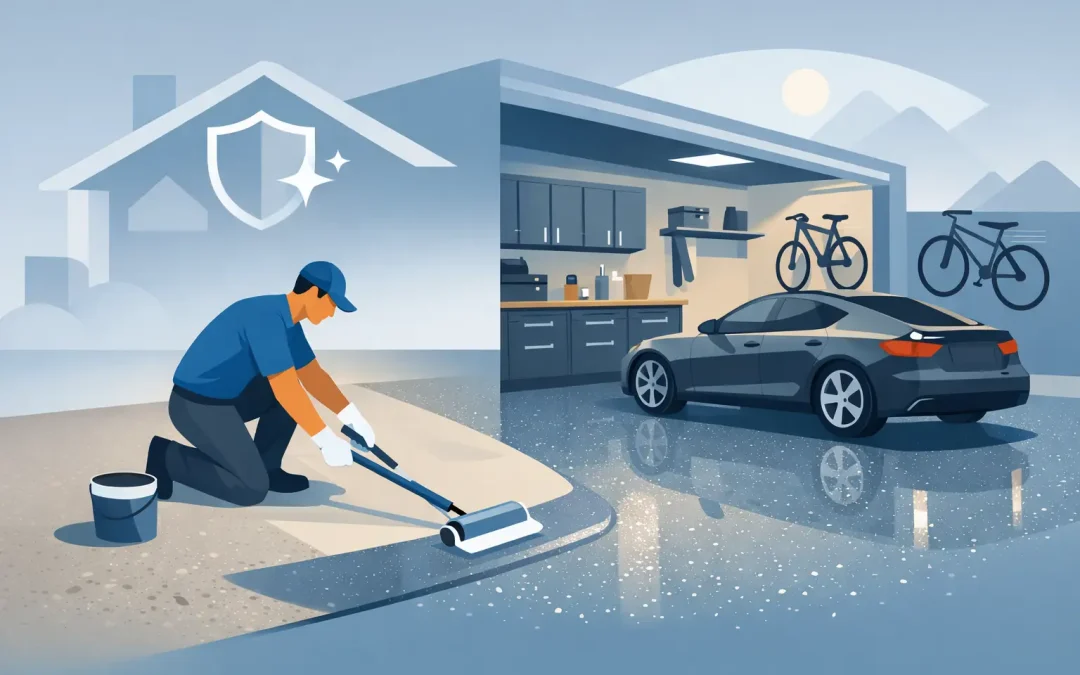
Next comes preparation. The garage is cleared or protected as needed, the floor is cleaned and prepared, and cracks or damaged areas are addressed. Once the surface is ready, the coating system is applied according to its requirements. Some systems include a base coat, decorative flakes, and a protective topcoat, while others use a simpler finish.
Cure time is just as important as application. The floor may appear dry before it is ready for vehicle traffic. Following the recommended waiting period protects the finish during its early stages and helps prevent avoidable damage. A professional should give clear guidance on when the garage can be walked on, when items can be returned, and when vehicles can safely come back inside.
Questions Worth Asking Before You Hire
Before selecting a contractor, ask how the concrete will be prepared, how cracks and stains will be handled, and what coating system is recommended for your garage. It is also reasonable to ask about the expected cure time, how the work area will be protected, and what routine maintenance the finished floor will need.
The lowest estimate is not always the best value if it leaves out critical preparation or uses a coating that does not match the floor’s condition. A clear estimate should help you understand the scope of work, the materials being used, and what the contractor will handle from start to finish.
For homeowners and commercial property owners, reliability matters as much as appearance. A clean work area, straightforward communication, careful preparation, and dependable completion all contribute to a better experience.
A well-coated garage floor gives a hardworking space the same level of care as the rest of the property. When you are ready to improve a stained, dusty, or worn concrete floor, request a free estimate and start with a professional assessment of the surface you have.
Recent Comments